
About training program and who should attend ?
This advanced BESS training program is designed for engineers, EPC professionals, project developers, consultants, and renewable energy enthusiasts who want practical expertise in BESS. The training covers complete BESS engineering including battery technologies, system design, sizing calculations, LOCS, modeling, EMS/BMS/PCS integration, safety, thermal management, commissioning, operation & maintenance (O&M), and product development. Delivered through industry-oriented live sessions and real project case studies, the program focuses on practical learning, design methodologies, performance analysis, and utility-scale BESS applications to help participants build strong technical capabilities for the rapidly growing energy storage industry.
Registration for training program
Please register by paying the registration fee based on your interest in the training program. You may choose any individual module or enroll in all modules depending on your area of interest. The details of the training content, schedule, and duration are provided below. Registration will be confirmed only after successful payment confirmation. The online training access and related details will be shared only with successfully registered candidates. For any doubts or clarification, please feel free to contact us.
BESS Training Registration – Candidates from India
| Training Module | Registration & Payment |
|---|---|
| BESS Training Module 1 (Uses & Design) | Register Now |
| BESS Training Module 2 (O&M) | Register Now |
| BESS Training Module 3 (Cell to Container) | Register Now |
| BESS Training – All Modules | Register Now |
BESS Training Registration – Candidates Except India
| Training Module | Registration & Payment |
|---|---|
| BESS Training Module 1 (Uses & Design) | Register Now |
| BESS Training Module 2 (O&M) | Register Now |
| BESS Training Module 3 (Cell to Container) | Register Now |
| BESS Training – All Modules | Register Now |
Broad content of training: Total training duration = 16 Hours
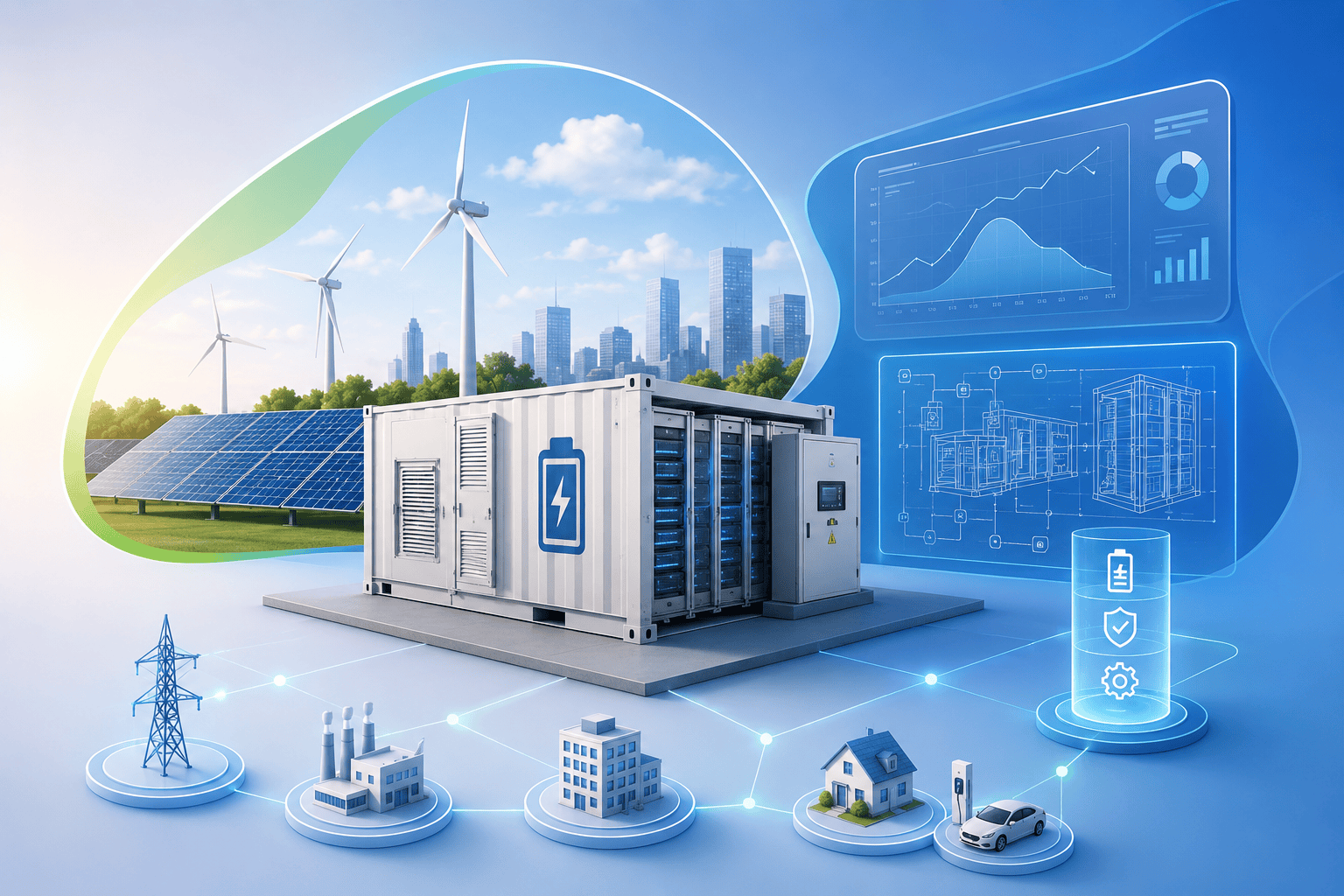
Battery storage (BESS) sizing and design (8 Hours)
- Understanding customer systems and proposing suitable BESS solutions
- Importance of proper sizing and its impact on performance and ROI
- Complete BESS BoM from battery to point of interconnection (PoI)
- System design philosophy and drawing requirements
- Communication challenges between PCS, EMS, and hybrid inverters
- DC- and AC-coupled architectures and grid code compliance
- Tender terminology and technical requirements
- System losses during charging and discharging
- Applicable standards for BESS, PCS, EMS, and BoM components
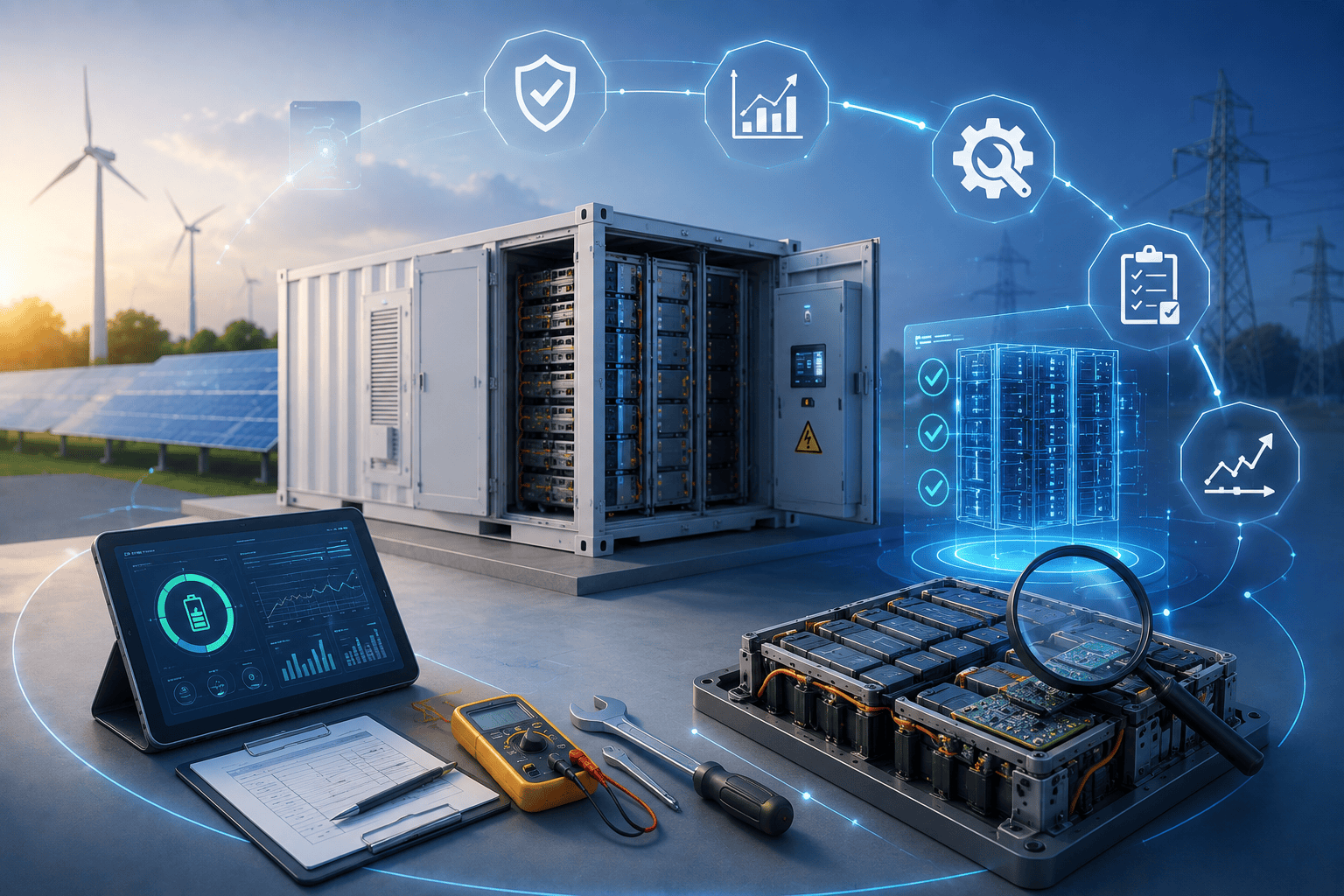
Battery operation, maintenance and KPI (4 Hours)
- OEM operation manuals, SOPs, and industry best practices
- Preventive, predictive, and corrective maintenance strategies
- Definition, monitoring, and calculation of BESS O&M KPIs
- KPI benchmarking against OEM guarantees, SLAs, and contracts
- EMS, BMS, PCS, and SCADA data interpretation for diagnostics
- Root cause analysis (RCA) and fault troubleshooting methodologies
- Battery degradation tracking and augmentation planning
- Thermal management and HVAC performance monitoring
- Availability, reliability, efficiency, and round-trip performance analysis
- Cybersecurity considerations for BESS monitoring and control systems
- O&M documentation, reporting, and compliance management
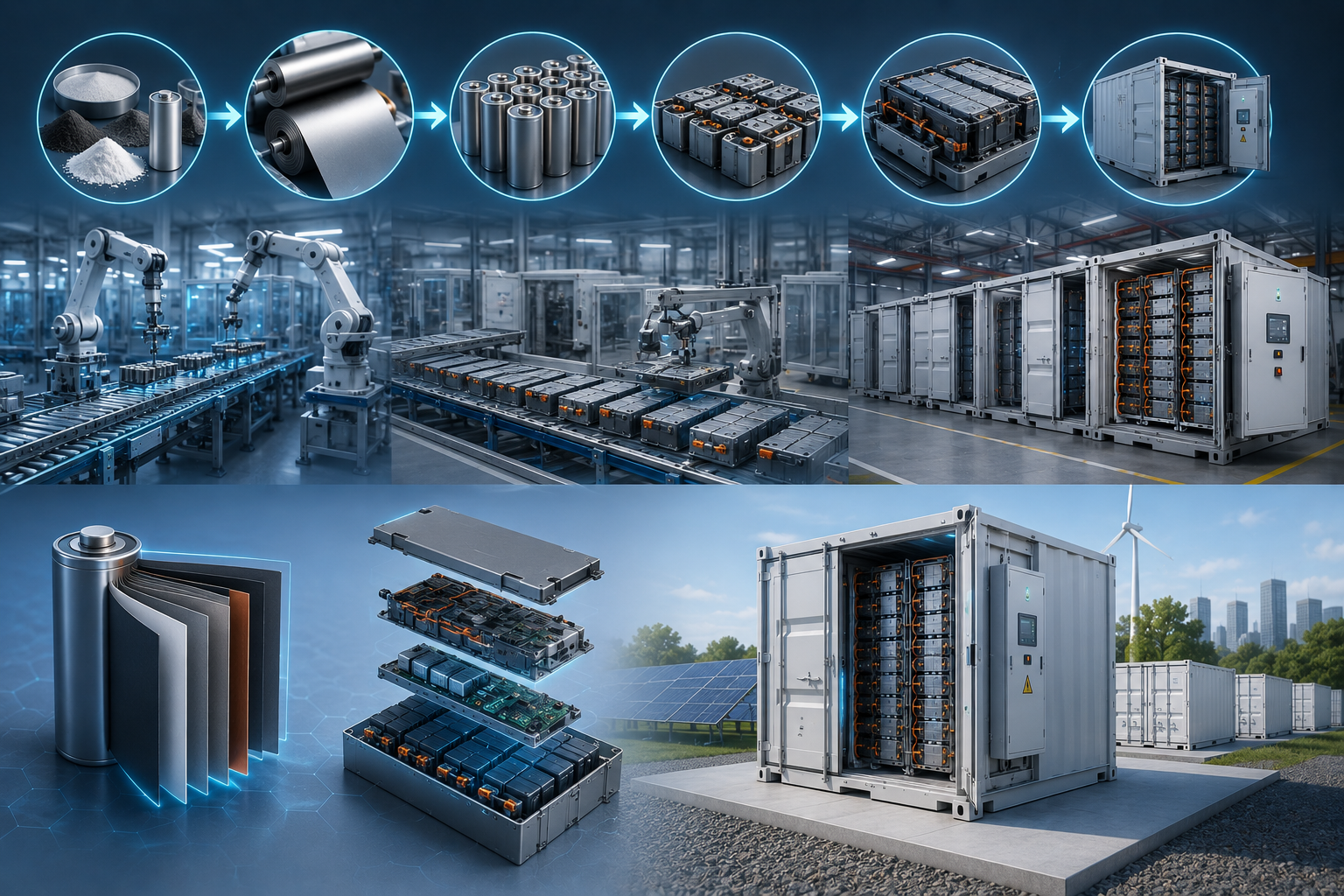
Battery cell to container manufacturing (4 Hours)
- Lithium-ion battery lifecycle: raw materials to end-of-life
- Active materials manufacturing and sustainability aspects
- Electrode manufacturing processes
- Cell assembly, formation, aging, and grading
- Production environment requirements (dry rooms, automation, safety)
- Scaling from cell to module, pack, rack, and container
- Mechanical, electrical, and thermal design considerations
- Assembly processes and key manufacturing equipment
- BoM structure for modules, packs, racks, and containers